Why Stratford's Heritage Buildings Are More Than Just Pretty Facades

Challenging the "Just Old Buildings" Myth
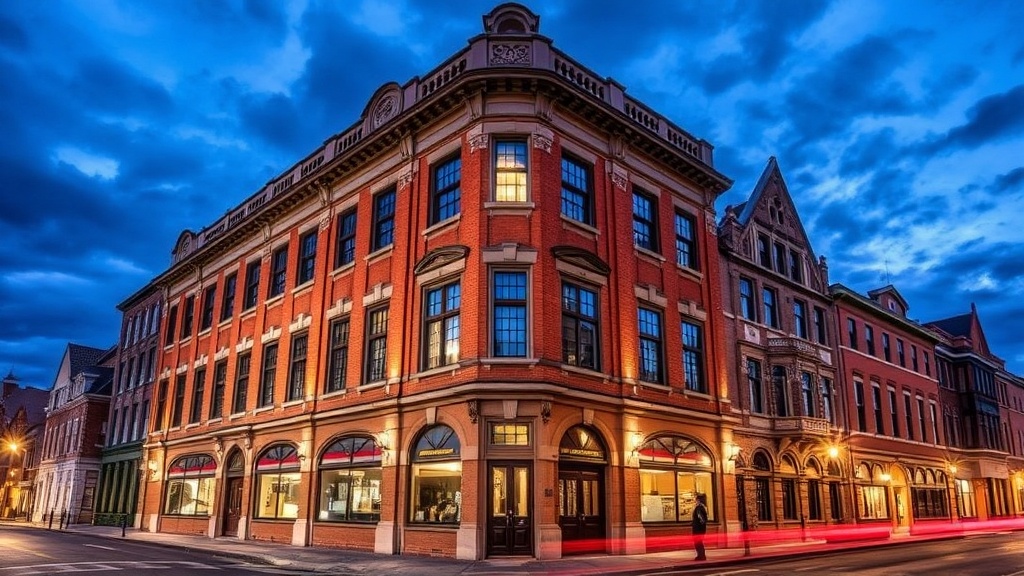
There's a persistent misconception floating around our community—that the historic architecture lining Stratford's streets is merely decorative, something for tourists to photograph while the rest of us get on with modern life. Some locals see the upkeep of these century-old structures as an expensive hobby, a quaint burden on municipal budgets that doesn't serve those of us who actually live here. That view misses something important. Stratford's built heritage isn't a museum piece—it's the physical framework of our daily lives, shaping everything from where we shop to how we gather as neighbours. These buildings carry the memory of who we've been and quietly influence who we're becoming. Understanding their real value means looking past the Instagram aesthetic and asking what they actually do for our community today.
What Counts as a Heritage Building in Stratford?
Before diving into specifics, let's clarify what we're talking about. The City of Stratford maintains a municipal heritage register that includes over 200 properties—not just the obvious Victorian showpieces on Ontario Street, but also mid-century commercial blocks, workers' cottages in the east end, and even some surprisingly modern entries. Heritage designation doesn't freeze a building in amber. Owners can (and do) renovate, retrofit, and adapt these structures—they just need to respect character-defining elements that tell the story of when and why they were built.
The difference between listed and designated properties matters too. Listed buildings are recognized as culturally significant but don't require municipal approval for alterations. Designated properties—like the Perth County Courthouse or the Stratford Public Library's original Carnegie wing—have stronger protections. Both categories represent decisions made by past community members about what's worth preserving, and both shape the distinct feel of walking through our neighbourhoods.
Where Do Local Groups Actually Meet in Stratford?
Here's something that surprised me when I started looking into it: a significant percentage of our community's non-profit organizations, hobby clubs, and faith groups meet in heritage buildings. The Stratford Perth Museum—housed in the former Perth County Jail and governor's residence on Huron Street—hosts everything from genealogy workshops to local history talks that draw residents tracing their family roots in Perth County. The building itself becomes part of the programming; you're learning about 19th-century prison reform while sitting in cells that once held actual inmates.
Down on Brunswick Street, the St. James Anglican Church complex (originally built in 1870 and expanded over decades) provides meeting space for multiple community groups at rates that newer construction simply couldn't match. The high ceilings and solid masonry that make the sanctuary beautiful also make parish halls surprisingly practical for everything from AA meetings to children's theatre workshops. Heritage buildings often have flexible spaces, central locations, and ownership structures—religious or institutional—that prioritize community access over maximum profit.
Even the Factory163 building on 163 King Street—a repurposed 19th-century industrial space—now serves as both commercial offices and occasional event venue. When local artists need exhibition space or entrepreneurs want to host a product launch without downtown rental rates, these adapted heritage properties fill a gap that generic strip malls never could.
How Does Adaptive Reuse Actually Work for Residents?
The term "adaptive reuse" sounds technical, but you've experienced it constantly as a Stratford resident. It's the practice of converting old buildings for new purposes while keeping their historic character intact. Our downtown core is essentially a case study in how this works at scale.
Take the Dominion Building at 101 Ontario Street. Built in 1889 as a furniture store and warehouse, it's been through multiple iterations—retail, offices, apartments. Today it houses a mix of professional services and residential units. The thick brick walls provide excellent insulation (lower heating bills), the large windows give natural light that modern construction often skimps on, and the location puts residents within walking distance of the Avon Theatre, the Stratford Farmers' Market, and the library. That's not nostalgia talking—that's practical urban living enabled by a building that outlived its original purpose.
The Cooper Site redevelopment on Brunswick Street represents a larger-scale example. What was once a collection of industrial buildings and underused lots is being transformed into a mixed-use neighbourhood. The project retains heritage structures where feasible while adding density that supports local businesses. For residents, this means more housing options in walkable proximity to downtown without demolishing the architectural context that makes Stratford feel like Stratford rather than Anywhere, Ontario.
Adaptive reuse also tends to happen at a human pace. Unlike blank-slate developments that appear overnight, heritage conversions usually involve incremental change—one building at a time, one owner making decisions. That rhythm gives communities time to adjust, to figure out what works and what doesn't, to have actual input into how their neighbourhood evolves.
What About the Cost of Maintaining Old Structures?
This is the honest question that heritage skeptics raise, and it deserves a straight answer. Old buildings do require maintenance—sometimes expensive, specialized maintenance. The roof on a 130-year-old commercial block isn't something you patch with standard materials from a big-box store. Window restoration, masonry repointing, and updating electrical systems in walls built before electricity existed all cost money.
But here's the counter-argument that doesn't get enough airtime: new construction has costs too, they're just distributed differently. When we demolish a heritage building and replace it with something modern, we pay in embodied carbon (the energy already invested in the original materials), in landfill fees for demolition waste, and in the lost character that attracted many of us to Stratford in the first place. The Ontario Ministry of Tourism, Culture and Sport provides grants and tax relief programs specifically for heritage conservation—resources that owner of new construction can't access.
Locally, the Stratford Perth Heritage Foundation offers technical advice and sometimes financial assistance for heritage property owners. They're a practical resource, not a preservation-at-all-costs organization. Their board includes contractors, real estate professionals, and homeowners who understand that heritage buildings have to work as buildings, not just as history lessons.
Can Heritage Designation Protect Neighbourhood Character?
The short answer is yes—but with important caveats. Heritage conservation districts, like the one covering much of Stratford's core, establish guidelines for how buildings can be altered or what new construction should look like. These aren't arbitrary aesthetic rules. They're based on documented patterns—roof pitches, setback distances, materials—that created the coherent streetscapes we value.
For residents, this translates to predictable neighbourhood character. When you buy or rent in a heritage district, you have reasonable assurance that the building next door won't be replaced by something that towers over your property, blocks your light, or clashes jarringly with its surroundings. That's not about preventing change—it's about managing it. The City of Stratford's Heritage Planning department processes dozens of applications annually for alterations to heritage properties, and the vast majority are approved with modifications rather than rejected outright.
The William Allman Memorial Arena—our beloved 1924 hockey barn on Nile Street—demonstrates how heritage recognition can coexist with modern needs. The city invested in significant upgrades (accessibility improvements, refrigeration system replacement) while maintaining the wooden interior and exterior character that makes watching a game there unlike anywhere else in junior hockey. That balance—functional modernity inside a recognizable historic shell—is the template for how heritage conservation actually works in practice.
Where Can You Learn More About Your Building's History?
Maybe you live in an older home and wonder about its past. Maybe you're considering buying a heritage property and want to know what you're getting into. Stratford has surprisingly good resources for amateur building historians.
The Stratford-Perth Archives on Huron Street maintains property records, fire insurance maps, and photograph collections that can trace most buildings back to their construction. Staff can help you navigate assessment rolls and city directories to learn who lived in your house decades ago. The Stratford Perth Archives website has digitized portions of their collection, though much still requires an in-person visit.
For architectural specifics, the Perth County Historical Society publishes research and occasionally offers walking tours focused on specific building types—workers' housing, commercial architecture, church design. Their publications often include details about local builders and architects whose names don't appear in standard architectural histories but who shaped the actual streetscape we inhabit.
Online, the Ontario Heritage Trust maintains a database of provincially significant properties, including several in Stratford. Even if your specific building isn't listed, understanding the architectural styles common in our area—Gothic Revival churches, Italianate commercial blocks, Queen Anne cottages—helps you recognize what features are original and worth preserving.
What Role Should Residents Play in Heritage Decisions?
Here's the uncomfortable truth: heritage conservation only works with ongoing community support. Designation papers and municipal bylaws provide the framework, but actual preservation happens because individual owners choose to invest in old windows rather than replace them, because tenants value character over square footage, because neighbours show up at council meetings when a demolition application threatens something the community values.
The Stratford City Council meets regularly to consider heritage matters, and these sessions are open to residents. The Stratford Municipal Heritage Committee—a volunteer advisory body—reviews applications and makes recommendations. Their meetings are public, and they genuinely want to hear from property owners and residents affected by their decisions. This isn't abstract policy-making; it's your neighbour arguing for stronger protection of a streetscape they walk daily, or a business owner explaining why proposed changes would make their building more functional.
If you're not inclined toward committee meetings, there's simpler participation: patronize businesses in heritage buildings, attend events at historic venues, talk to your property-owning friends about maintenance resources. The economic viability of heritage structures depends on usage. Empty heritage buildings deteriorate fast; occupied, loved ones last generations.
Looking at What's Actually Around You
The next time you're walking through Stratford—whether that's down Ontario Street on your way to the theatre, or through the residential streets between the Avon River and the railway tracks—look at the buildings with fresh eyes. Not as backdrop, but as infrastructure. Notice how the varied rooflines create interesting skylines, how the setback of older houses creates sidewalk shade in summer, how the mixed ages of construction create visual rhythm rather than monotony.
These aren't accidents. They're the accumulated decisions of thousands of Stratford residents over nearly two centuries, each contributing to a built environment that supports community life in ways we often take for granted. Heritage conservation isn't about preventing Stratford from changing—it's about ensuring that as we change, we don't discard the physical elements that make this specific place worth living in. The buildings will outlast us. The question is what condition we'll leave them in for the next generation of Stratford residents who'll call them home.